Why Is My Furnace Short Cycling? Causes and Fixes
Short cycling is when your furnace starts a heating cycle, runs for only a short time, shuts off, and then starts again a few minutes later — over and over. Instead of steady, even heat, you get frequent on-off bursts that never quite warm the house.
It's more than an annoyance. Short cycling drives up your gas bill, leaves rooms uneven, and puts hard wear on igniters, blowers, and control boards. Here's what's usually behind it and what it takes to fix.
What Short Cycling Actually Is
A healthy furnace runs in cycles long enough to bring the whole house up to temperature and let the heat exchanger do its job. Short cycling means those cycles are cut off early — often lasting just a few minutes. The furnace never reaches an efficient steady state, and the constant restarting is where the real wear and wasted fuel come from.
The causes fall into two buckets: things that make the furnace overheat and shut down for safety, and things that fool the furnace into thinking the house is already warm. Most short-cycling calls trace back to one of the following.
A Dirty Air Filter
This is the most common and most overlooked cause. A clogged filter starves the furnace of airflow, so the heat exchanger overheats and the high-limit switch shuts the burners off. The furnace cools, restarts, overheats again, and the cycle repeats. Before anything else, check your filter — if it's dirty, replace it and see if the cycling stops.
An Overheating Furnace
Beyond a dirty filter, anything that restricts airflow or traps heat can trip the high-limit safety the same way: closed or blocked supply vents, a failing blower motor, or ductwork problems. The safety switch is doing its job — protecting the heat exchanger — but the repeated tripping is a sign the underlying airflow issue needs attention, not a switch to ignore.
A Faulty Flame Sensor
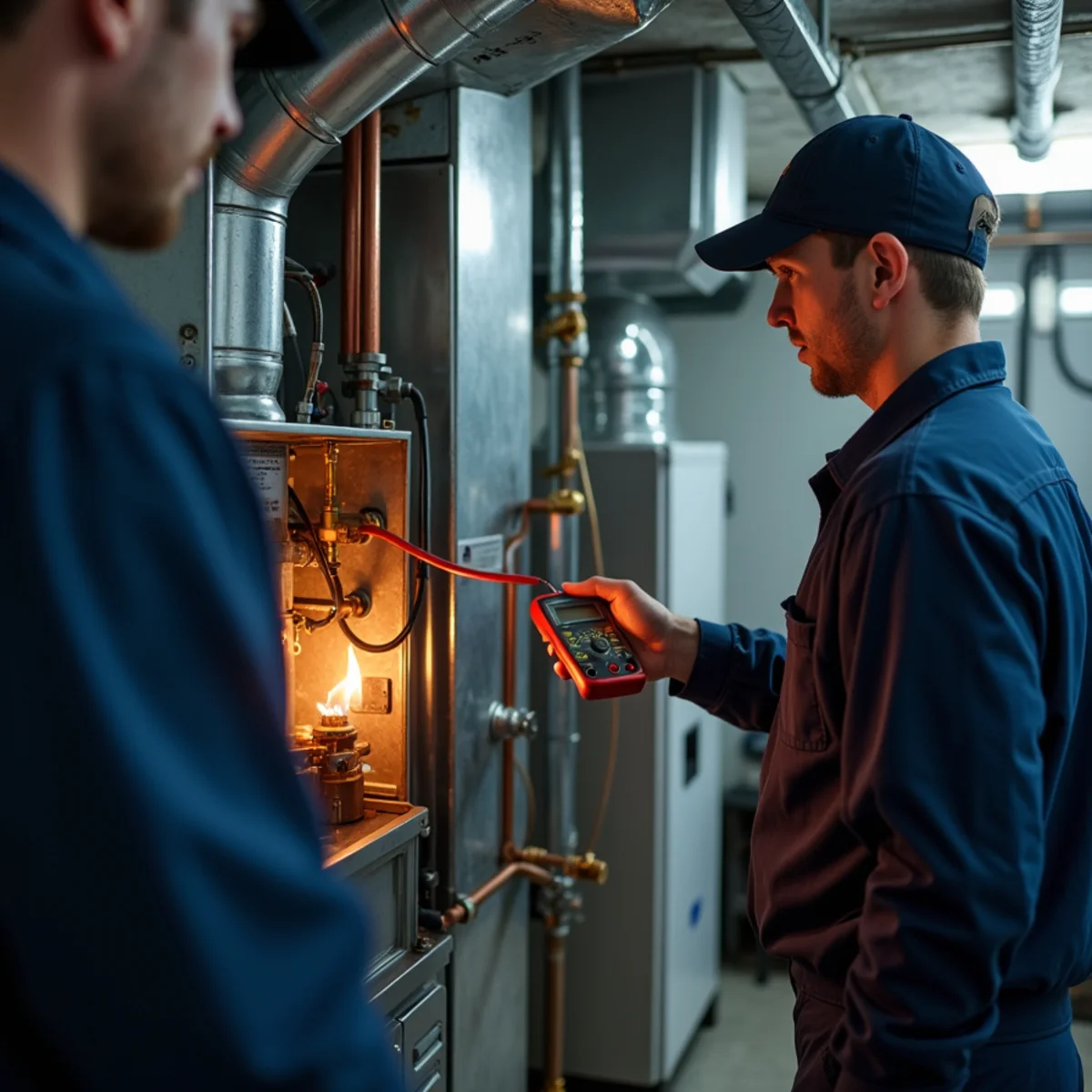
A dirty or failing flame sensor can't confirm the burners lit, so the furnace shuts the gas off within seconds of ignition — then tries again, and again. That rapid light-and-quit pattern is a frequent short-cycling cause and a quick, inexpensive fix for a technician. Because it involves the gas and combustion system, it's not a DIY repair.
Thermostat Location or Problems
A thermostat mounted near a supply vent, in direct sun, or next to a heat source gets a false reading — it warms up fast, tells the furnace to shut off, then cools and calls for heat again. Loose wiring or a failing thermostat can do the same. If your cycling started after a thermostat change or a room rearrangement, that's a strong clue.
An Oversized Furnace
Sometimes the furnace is simply too big for the home. An oversized unit heats the space so quickly that it satisfies the thermostat and shuts off before a full cycle completes — then short cycles all season. This is a design problem, usually from a replacement that wasn't properly sized, and it's one reason we insist on a load calculation before quoting a new furnace rather than just matching the old one's capacity.
When to Call a Technician
Replace your filter first — it resolves a real share of short-cycling calls. If the furnace keeps cycling after a fresh filter, don't let it run that way; the repeated ignition and shutdown wears out expensive parts and wastes fuel. A technician can pinpoint whether it's airflow, the flame sensor, the thermostat, or a sizing issue, and fix the actual cause rather than treating the symptom.
The Polar bottom line
Short cycling is your furnace telling you something — usually about airflow, the flame sensor, the thermostat, or sizing. Change the filter first, and if the rapid cycling continues, get it diagnosed before it wears out costly components or runs up your winter gas bill. Polar Refrigeration & Air Control services short-cycling furnaces across Chicagoland. Call (831) 461-3437.
Related services & areas